

Henan Niujiao Industrial Co., Ltd.
Niujiao Chemical specializes in supplying a variety of chemical products, focusing on the research and development, production and trade of various chemical raw materials and products, relying on superior product quality exported to more than countries and regions.
Why Choose Us
Rich Experience
Niujiao Chemical specializes in supplying a variety of chemical products, We have 20 years experience, focusing on the research and development, production and trade of various chemical raw materials and products, relying on superior product quality exported to more than countries and regions.
Custom Service
We understand that each customer may have unique requirements. We have the flexibility to customize our rubber additives to meet specific formulation needs, ensuring optimal compatibility and performance in various rubber applications.
Global Shipping
The products are exported to more than 100 countries and regions such as the United States, the United Kingdom, France, Japan, Russia, South America, Southeast Asia and Africa. With a complete range of varieties and specifications, favorable prices and excellent services, it has a good reputation in the market.




What is an Accelerator and How Does It Work?
An accelerator is a physical device used to accelerate charged particles, such as electrons or protons, to high energies. Accelerators work by applying electric fields to particles to increase their velocity. This process is repeated multiple times to increase the particles' energy levels. Accelerators are used in many fields, including physics, chemistry, medicine, and industry.
What are the Different Types of Accelerators Available?
In the context of chemistry and industrial processes, accelerators refer to substances that speed up chemical reactions or physical processes. The term "accelerator" can apply to various fields, including polymerization, vulcanization of rubber, and catalytic reactions in chemical synthesis. Here are some common types of accelerators across different applications:

Vulcanization Accelerators
As previously mentioned, these are used in the rubber industry to speed up the cross-linking process between rubber molecules. The main categories include thiurams, thiazoles, sulfenamides (also known as sumules), guanidines, disulfides, and mercaptobenzothiazoles.

Polymerization Initiators
Used in the synthesis of polymers, these compounds start or accelerate the polymerization process. Examples include azo compounds, peroxides, and photo initiators.

Catalysts
In the field of organic chemistry, catalysts accelerate chemical reactions without being consumed in the process. Types of catalysts include acids, bases, metal complexes (such as enzymes, organometallics), and heterogeneous catalysts.

Curing Accelerators
Similar to vulcanization accelerators, these are used in the curing of resins, especially epoxy resins, to reduce the time and temperature required for the cure process. Examples include amines and anhydrides.

Photoinitiators
These are used in photopolymerization processes, where light is used to initiate the polymerization of monomers or prepolymers. Commonly used photoinitiators include acetophenone derivatives, benzoin ethers, and thioxanthones.

Reductants/Oxidizing Reduction (Redox) Reagents
These substances act as reducing agents in redox reactions, often accelerating the reduction of another substance. Examples include ascorbic acid, sodium borohydride, and hydrogen peroxide.

Heat Accelerators
In some reactions, increased temperature acts as an accelerator by providing the necessary energy for reactant molecules to overcome activation energy barriers.

Metal Ions
Certain metal ions can accelerate reactions by serving as Lewis acids, coordinating with substrates and polarizing bonds, which can increase the reactivity of compounds involved in the reaction.
What is Rubber Additives Accelerator
Rubber additives, specifically accelerators, play a crucial role in the vulcanization process of rubber compounds. Vulcanization is a chemical process that adds cross-links between the polymer chains of the rubber, thereby enhancing its elasticity, durability, and strength.
Accelerators speed up the rate at which sulfur forms cross-links with the rubber during vulcanization. Without accelerators, vulcanization would be very slow and require higher temperatures. There are different types of accelerators, classified primarily based on their chemical structure and reaction mechanisms:
1. Thiurams: These are sulfur-containing additives that accelerate the vulcanization process. An example is tetramethylthiuram disulfide (TMTD).
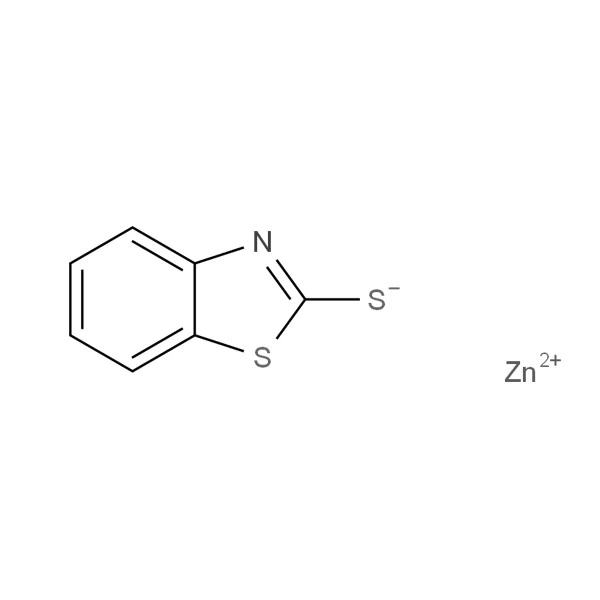
2. Thiazoles: These accelerators have a heterocyclic ring structure that contains sulfur. One example is 2-mercaptobenzothiazole (MBT).
3. Sulfenamides or Sumules: These are characterized by an amine sulfur linkage in their structure. N-tert-butyl-2-benzothiazylsulfenamide (TBS) is commonly used in tire production.
4. Disulfides: These contain two sulfur atoms and are used to initiate cross-linking.
5. Guanidines: These have a guanidine ring and are used for their primary accelerator action. Examples include diphenylguanidine (DPG).
6. Zinc Oxide and Fatty Acids: While not strictly accelerators, they are activators that improve the efficiency of accelerators and the overall vulcanization process.
The choice of accelerator depends on the type of rubber being processed, the required properties of the final product, and the conditions under which the rubber will be used. Accelerators must be chosen carefully to ensure compatibility with the rubber compound and to avoid adverse reactions that could compromise the integrity of the finished product.
What is the Application of Accelerator In Medicine?
Accelerators have several important applications in medicine. Here are some common examples:

Radiotherapy: Particle accelerators are used in cancer radiotherapy to deliver high-energy beams of particles, such as protons or electrons, directly to the tumor. This targeted treatment can minimize damage to surrounding healthy tissues.
Medical Imaging: Accelerators can be used in techniques like positron emission tomography (PET) to produce radioactive isotopes for imaging purposes. These isotopes help in the detection and diagnosis of various diseases.
Radionuclide Therapy: Some accelerators are involved in the production of radioactive isotopes for radionuclide therapy. These isotopes can be used to treat diseases like thyroid cancer or certain types of tumors.
Research and Development: Accelerators play a crucial role in medical research, enabling studies on fundamental biological processes, the development of new drugs, and the investigation of disease mechanisms.
Proton Therapy Centers: Specialized proton therapy facilities utilize accelerators to deliver proton beams for cancer treatment, offering more precise targeting and reduced side effects compared to traditional radiotherapy.
What are the Applications of Accelerators Physics?
Accelerators in physics are devices used to propel charged particles to high speeds by applying electric fields with a velocity that can approach the speed of light. The applications of particle accelerators span a wide range of scientific and technological areas, including:
Basic Physics Research
Particle accelerators are fundamental tools in the quest to understand the fundamental particles and forces that govern the universe. Colliders like the Large Hadron Collider (LHC) at CERN allow physicists to recreate conditions similar to those just after the Big Bang and study high-energy particle interactions.
Medical Applications
Accelerators are used in medicine for cancer treatment using proton therapy or heavy ion therapy, which can target tumors with greater precision while minimizing damage to surrounding healthy tissue. They are also utilized in radiation therapy and for producing medical isotopes used in diagnostic imaging.

Material Science
Accelerators can be used to study the structure and dynamics of materials at the atomic and molecular levels. By bombarding materials with high-energy particles, researchers can investigate defects, impurities, and changes in material properties.
Particle Detectors and Instrumentation
The development of particle accelerator technology has spurred advances in detectors and electronics for sensing, recording, and analyzing particle interactions, which are crucial for both scientific research and practical applications such as radiation monitoring.
Nuclear Physics
Accelerators are employed in nuclear physics to explore the properties of atomic nuclei, study nuclear fusion as a potential energy source, and investigate neutron-rich isotopes.

Environmental Monitoring
Accelerators can help monitor environmental radioactivity by analyzing samples for isotopes produced by nuclear reactions. This is important for assessing the spread of nuclear material and the impact of nuclear accidents.
Food Irradiation
Accelerators are used to irradiate food to kill bacteria and insects, extend shelf life, and reduce spoilage, all without significantly altering the taste or nutritional value of the food.

Particle Astrophysics and Cosmology
Accelerators are instrumental in simulating cosmic ray events and studying the interactions of high-energy particles with matter, which helps in understanding phenomena in space.
Industrial Applications
Accelerators have applications in non-destructive testing (NDT) for inspecting the integrity of materials and components in various industries, including aerospace, automotive, and infrastructure.
What is the Role of the Accelerator in Vulcanization?
In the context of vulcanization, an accelerator is a substance that is added to the rubber or rubber compound to speed up the vulcanization process. The role of the accelerator in vulcanization is to increase the rate of cross-linking, which is the process where the rubber molecules form chemical bonds with each other.
By using an accelerator, the vulcanization time can be reduced, allowing for faster production and increased efficiency. Accelerators also help to improve the physical properties of the rubber, such as its strength, elasticity, and durability. They can enhance the rubber's resistance to heat, aging, and chemicals.
The choice of accelerator depends on various factors, including the type of rubber being used, the desired properties of the final product, and the manufacturing process. Different accelerators may have different activation temperatures and effects on the vulcanization kinetics.
It's important to note that the use of accelerators in vulcanization requires careful control and monitoring to ensure proper vulcanization and to avoid over-vulcanization or under-vulcanization. The amount of accelerator added and the conditions of the vulcanization process need to be optimized to achieve the desired results.
If you have any specific questions about accelerators in vulcanization or need more detailed information, I'd be happy to help. Additionally, if you're working with rubber or involved in the rubber industry, it's recommended to consult with experts or refer to relevant technical literature for accurate and specific guidance.
What are Rubber Accelerators used For?
Rubber accelerators are chemical compounds used in the manufacturing of rubber products to speed up the curing process, known as vulcanization. Vulcanization involves heating rubber with sulfur to create cross-links between the polymer chains, thereby improving the mechanical strength, elasticity, and durability of the rubber. Without accelerators, the vulcanization process would take much longer and could lead to rubber that is overly brittle or has poor physical properties.
There are several types of rubber accelerators, each with its own specific characteristics and uses:
Thiurams – Provide good resistance to aging and flexing and are commonly used in tire production.
Thiazoles – Offer good processing characteristics and are often used in the manufacture of conveyor belts and hoses.
Sulfenamides (also known as sulfenamidines) – Are considered primary accelerators and are widely used because of their fast cure rates and low odor.
Dithiocarbamates – Often used in the production of off-road tires due to their excellent resistance to abrasion.
Guanylureas – Provide medium to fast cure rates and are used in a variety of rubber goods, including conveyor belts.
Zinc oxide – Although not a traditional accelerator, it is often used alongside accelerators to improve the physical properties of the vulcanized rubber and to act as a activator.
Tetramines – Offer a balance between scorch resistance and cure rate, making them suitable for a range of rubber articles.
Disulfides – Used primarily in the production of synthetic latex and adhesives.
The choice of accelerator depends on the type of rubber being processed (natural or synthetic), the desired properties of the final product, and the conditions under which the rubber will be used. Accelerators can affect the rate of vulcanization, the temperature at which the rubber begins to degrade during vulcanization (scorch temperature), and the final physical characteristics of the cured rubber. Proper selection and use of accelerators are essential for achieving high-quality rubber products.

What is a Prepared Rubber Accelerator?
A prepared rubber accelerator is a type of chemical compound that is specifically formulated and manufactured for use in the rubber vulcanization process. It is a pre-mixed or pre-dispersed form of an accelerator, usually combined with other ingredients to enhance its performance and ease of use.
Prepared rubber accelerators are designed to provide several benefits. They often offer improved dispersion and uniformity within the rubber compound, ensuring more consistent vulcanization. This can lead to better quality and reproducibility in the final rubber product.
These accelerators may also come with added stabilizers or activators, which can help optimize the vulcanization kinetics and improve the overall properties of the rubber. Prepared accelerators can simplify the formulation and mixing process, as they are readily available in a pre-packaged form.
The specific formulation and properties of prepared rubber accelerators can vary depending on the application and requirements. Different types of accelerators may be selected based on the rubber type, desired vulcanization speed, and final product specifications.
It's important to follow the manufacturer's instructions and recommendations when using prepared rubber accelerators, as the correct dosage and addition method are crucial for achieving the desired vulcanization results. Additionally, safety precautions should be followed when handling and using these chemicals.
If you have specific questions about a particular prepared rubber accelerator or need more detailed information, it's best to refer to the product documentation or consult with a rubber compounding specialist or supplier. They can provide specific guidance and advice based on the specific application and rubber formulation.
What Accelerators are Used in Rubber Vulcanization?
In the vulcanization process of rubber, several classes of accelerators are commonly used to control the rate and temperature of the reaction, ensuring optimal cross-linking of the rubber polymer chains. The most prevalent types include:
Primary Accelerators – These are used directly to initiate the vulcanization process. Examples include:
Sulfenamides (e.g., MBT - mercaptobenzothiazole, TMTD - thiomethylthio-2,4-dinitrobenzene): They provide a moderate to fast cure rate and are widely used due to their balanced performance.
Sulfenamidines (e.g., CBS - N-cyclohexyl-2-benzothiazole sulfenamidine): These are known for their fast cure rates and low volatility.
Secondary Accelerators – These are added to modify the cure rate and to prevent premature vulcanization, known as scorching. Common secondary accelerators include:
Tertiary amines (e.g., TMTD - tetramethylthiuram disulfide, CBS - cyclohexyl-2,2,4-trimethylquinoline): They work in conjunction with primary accelerators to control the cure rate.
Guanylureas (e.g., DPG - diphenylguanidine): They provide a medium to slow cure rate and are particularly useful in high-temperature processes.
Activators – These compounds enhance the action of accelerators by increasing the reactivity of sulfur. Zinc oxide (ZnO) is the most common activator and is almost always used with accelerators.
Retarders – These substances slow down the vulcanization process, allowing more time for mixing and shaping of the rubber before curing. Retarders include certain antioxidants and metal oxides.
The selection of accelerators depends on factors such as the type of rubber, the required physical properties of the finished product, the vulcanization temperature, and the presence of other additives. The combination of accelerators and activators is carefully balanced to achieve the desired cure profile, which is critical for the performance of rubber products in various applications, ranging from tires and conveyor belts to seals and gaskets.

Our Factory
Niujiao Chemical specializes in supplying a variety of chemical products, focusing on the research and development, production and trade of various chemical raw materials and products, relying on superior product quality exported to more than countries and regions. With a complete range of varieties and specifications, favorable prices and excellent services, it has a good reputation in the market, won more and more customers, and reached a mutually beneficial cooperative relationship.

FAQ
Q: What are rubber accelerators used for?
Q: What is the role of the accelerator in vulcanization?
Q: What is the use of activator in rubber?
Activators are inorganic and organic chemicals used to activate the action of accelerators. These materials reduce the vulcanization time (cure time) by increasing the rate of vulcanization.
Q: What is the difference between CBS and MBTS?
Q: Do nitrile gloves have rubber accelerator?
Q: Do nitrile gloves contain rubber accelerators?
Q: What accelerators are used in rubber vulcanization?
Q: What are the applications of vulcanized rubber?
Q: What is a prepared rubber accelerator?
Q: What is the most commonly used rubber vulcanization?
SF6 is used in the vulcanisation of rubber. Sulphur is heated with rubber to introduce cross-linking and thus form a tougher form of rubber.
Q: What is the activator in rubber compounding?
Q: How is rubber sap turned into rubber?
Q: What elements is used to harden rubber?
Q: What are the examples of vulcanization accelerators?
Q: How do you harden rubber?
Q: Why do we add sulphur to rubber?
Q: What does sulphur do to rubber?
Q: What is zinc stearate used for in rubber?
Q: When should you not use nitrile gloves?
Q: What eats through nitrile gloves?
Certain chemicals can soak through nitrile gloves. For example, strong acids and even some alcohols can penetrate these gloves with time. The “breakthrough” time is the amount of time the chemical takes to get through the glove.
We're professional accelerator manufacturers in China, specialized in providing high quality products and service. We warmly welcome you to buy cheap accelerator from our factory. For quotation and free sample, contact us now.
C9H20N2S, 4 4 Methylenedianiline, ZPDC